


Key Takeaways
- E-commerce ad network selection should start with business goals: acquisition, retargeting, ROAS, or scale.
- Channel fit, audience intent, creative format, and tracking quality matter more than network popularity.
- Test networks with clear KPIs and attribution before scaling budgets.
Scaling an e-commerce business in 2026 isn’t just about running more ads — it’s about picking the right ad networks for your products, audience, and budget. With the rise of retail media platforms like Amazon Ads and Walmart Connect, new privacy rules, and AI-driven automation, the landscape has never been more complex.
This guide breaks down how to choose the right ad networks to scale your e-commerce store profitably. You’ll learn what each network does best, which stage of the marketing funnel it fits, how pricing models like CPC, CPM, and CPA work, and what prerequisites you need before spending a dollar. By the end, you’ll know how to build a data-driven “ad stack” — combining networks for awareness, retargeting, and conversion — so you can grow faster and spend smarter in 2026.
What Is an Ad Network & Key Terms
Here are the basics you need to understand before diving deeper. Think of these like tools and vocabulary.
- Ad Network / Retail Media Network (RMN): A platform, often run by a retailer or marketplace, that lets brands advertise using that retailer’s properties (website, app, store) or data. For example, Amazon Ads or Walmart Connect. Because those networks know what customers buy, their ads tend to convert more often.
- ROAS (Return On Ad Spend): How much money you get back for each dollar spent on advertising. For example, if you spend $1,000 and get $4,000 in revenue from that, your ROAS is 4× (or 400%).
- CPC / CPM / CPA:
- CPC (Cost per Click): You pay when someone clicks your ad.
- CPM (Cost per Mille): You pay per 1,000 times your ad is shown.
- CPA (Cost per Action): You pay when someone takes a defined action (often a purchase).
- First-party data: Data you collect directly from your customers (via your store, purchases, loyalty programs). Much more reliable under new privacy rules than third-party cookies.
- On-site vs Off-site vs In-store vs CTV ads:
- On-site: Within retailer’s website/app.
- Off-site: Displayed elsewhere using retailer’s data (e.g., display/banner on external sites).
- In-store: Physical signage or digital screens inside stores.
- CTV (Connected TV): Streaming TV ads, smart TVs, etc.
- Funnel stages (Awareness, Consideration, Conversion): Think of the customer path: they first learn (awareness), then compare or consider, then buy. Different ad networks/formats work better at different stages.
Step-by-Step Guide Before Choosing the Ad Networks for Your Online Store
Before you pick or pay for any ad network, your chances of success improve enormously if you have these in place:
High-quality product feed
- Good images, clear product titles, correct attributes (size, color, SKU, etc.).
- Updated stock and pricing. Feed errors often kill campaigns without you seeing why.
Proper tracking & attribution
- Use Google Analytics 4 (or equivalent), server-side event tracking, pixel or SDK integrations.
- Use UTM parameters for tracking external campaigns.
- Be ready to use modeled conversions (especially for Facebook / Meta) once privacy rules block detailed data.
Customer / first-party data access
- If you have a loyalty program or past customers, you can retarget or find lookalikes.
- If your product catalog is large, integrating detailed product data helps with dynamic ads.
Creative assets & design capability
- High quality photos, videos, ad templates.
- Ability to refresh creative often (to avoid ad fatigue).
Budget readiness
- Some networks need high minimums (Amazon DSP often $35,000-$50,000 in many cases).
- You don’t need huge upfront for all networks, but you should plan scaling.
Performance mindset & measurement
- Set clear goals (ROAS target, cost per acquisition, profit margins).
- Always test small, measure, then scale.
- Be ready to pivot if ROAS drops.
How to Build a Funnel and Ad Network Stack Strategy:
Instead of picking one, successful brands use a stack of networks that cover different stages of the funnel. Here’s a simple framework.
| Funnel Stage | Networks / Platforms to Use | Reason / Role |
| Awareness / Discovery | TikTok Ads, Pinterest Ads, Meta Reels / Stories, Programmatic Display, CTV via Walmart Connect or others | Reach people who don’t yet know you. Build brand. |
| Consideration / Intent | Google Search, Google Shopping, Amazon/Walmart Search ads, Meta retargeting, RMN listing ads | Capture those comparing options, warm-up to buy. |
| Conversion / Purchase | RMNs (Amazon, Walmart, Instacart, Kroger), Google Shopping / Performance Max, Retail Search, Feed-based and Product Listing Ads | Close the sale; target high intent or direct purchase. |
Sample Stack Approach:
- Start small: use Google Shopping + Meta retargeting.
- Once you find good data and ROAS, test a RMN such as Amazon or Walmart.
- Use awareness channels (Pinterest, TikTok) sparingly to bring new audiences.
- Retarget via DSP or programmatic or network off-site if price efficient.
Factors to Consider When Choosing a Network
Here are detailed things you should check for each candidate network so you make the right choice:
| Factor | What to Evaluate |
| Shopper Intent & Audience Fit | Are your customers present there? If you sell luxury goods, Walmart or Instacart grocery-first might not give you enough return. |
| Vertical / Product Type | Some networks are stronger in CPG, groceries, home & decor, cosmetics. Others are better for electronics, or niche products. |
| Cost Benchmarks | Think in terms of what typical CPC, CPM, or ROAS are for your product vertical. Know ranges. |
| Formats Available | If your product needs visual storytelling (fashion, beauty, design), video or native display matters. If search or catalog works, that’s enough. |
| Data & Attribution Capability | Can you track actual purchases? Do you have offline + online tracking? Do you have customer data? |
| Minimum Requirements / Budget | Some networks require you to be a verified seller, or to commit high spend. Know that before starting. |
| Creative & Technical Needs | Product feed integration. Video production. Feed maintenance. |
| Overlap & Frequency Capping | If you use many networks, avoid showing same ad many times. Manage ad fatigue. |
| Privacy & Regulation Compliance | GDPR, CCPA, iOS / Android privacy changes. Use networks that are adapting. |
Comparison Table: Top Ad Networks to Scale E-Commerce in 2026
Here’s a summary of key networks, what they offer, what they cost, and who they’re best suited for. Use this to quickly compare.
| Ad Network | Main Strengths / Shopper Intent | Formats You Can Use | Cost / Pricing Model (2026 Benchmarks) | Key Challenge(s) to Watch | Best For Brands That… |
| Amazon Ads | Huge intent; people already shopping; first party data; massive scale | Product listing ads, sponsored brands, display/video via DSP, retargeting | CPC for listings often $0.75-$5+; DSP minimum spend often $35-50k; premium CPMs for VP video/audio | High competition and cost inflation; steep learning curve; margin pressure | Brands already selling on Amazon; want to dominate search & product visibility |
| Walmart Connect | Omnichannel reach (online + in store); shopper loyalty / in-store data; expanding off-site & CTV inventory | Sponsored search, display, in-store signage, off-site programmatic, video/CTV | CPCs below Amazon in many categories; video/CTV higher CPM; premium placements cost more; potential minimum spend rising | Creative demands; access to premium placements sometimes limited; reporting still evolving | Brands in groceries, household goods, health, general merchandise |
| Target Roundel | Stylish audience; strong branding / aesthetics; in-store + app synergy | Native display, product listings, in-store & app ads, editorial / display formats | CPM higher for premium display or native; standard catalog/ listing spots more affordable; vendor status helps rates | Less scale compared to Amazon; cost for premium visuals; international reach limited | Lifestyle, fashion, beauty, home décor brands |
| Kroger Precision Marketing | Grocery shopper data; loyalty program; strong offline + online measurement | Sponsored products, personalized offers, off-site ads, in-store & digital receipt promos | Often lower CPCs in grocery categories; CPMs for display higher; budgets required for premium targeting / personalization | Limited vertical reach (non-grocery / high price luxury less effective); creative formats modest | CPG, food, health, household essentials |
| Instacart Ads | Very high intent (people building orders); multi-store presence; urgency in purchase behavior | Featured products, display/video in app, brand pages | CPC often under $1 in many fast-moving categories; video/ brand pages cost more; spend scaling required | Format options limited; complexity varies by store partner; cost spikes in popular items | Grocery, everyday essentials, beverage, cleaning, baby products |
| Meta Ads (Facebook / Instagram) | Massive reach; visual storytelling; strong retargeting; discovery + impulse buys | Feed, Stories, Reels, video, carousels, catalog / dynamic product ads | CPMs vary $5-$20+ depending on audience & creative; CPCs vary; ROI impacted by privacy changes; smaller budgets still possible | Attribution issues after iOS / privacy changes; ad fatigue; rising creative costs | Brands with strong visuals; impulse / fashion / beauty / lifestyle; brands that can produce frequent content |
| Google Ads / Shopping | Clear intent: people searching to buy; huge reach; trusted search platform; display & video options | Search ads, Shopping product feed ads, Performance Max, Display / Video retargeting | CPCs vary $1-$5 in many categories; CPCs higher in competitive verticals (electronic, high tech); shopping feed feed quality crucial | Feed mistakes; rising CPCs; competition intense; getting access to premium placements can be costly | Brands with search demand; product categories where people search by feature; optimized product catalog |
| TikTok Ads | Discovery + virality; younger audience; trend-driven reach | Short video ads, collection ads, shopping tags, influencer collaborations | CPMs lower in some broad reach formats (~$2-$6); video production cost; cost per acquisition often variable | Creative costs; trend dependence; sometimes low conversion for high-priced, technical, or staple goods | Brands with visual appeal; products suited to impulse buying; younger demographic focus |
| Pinterest Ads | Planning / discovery; people saving ideas; visual orientation | Promoted pins, catalogs, video pins, shopping tags | CPC/CPM moderate; best ROI in verticals like home décor, fashion, gifts; cost increases in premium categories or holidays | Conversion often slower (because buyer is planning, not buying immediately); needs strong visuals | Visual products; small gift sets; seasonal products; décor; home improvement |
| Programmatic DSPs / Networks (AdRoll, The Trade Desk etc.) | Broad reach, off-site inventory, retargeting, audience expansion outside retailer ecosystems | Dynamic retargeting, display, video, native ads, cross-site reach | CPM or CPA depending on targeting; premium placements cost more; need sufficient budget to scale | Attribution and viewability issues; creative complexity; potential waste if targeting isn’t sharp | Brands that want retargeting; brands that want to cover gaps in reach; those with strong analytics & creative capacity |
Below are deeper looks at each ad network.
Network 1: Amazon Ads
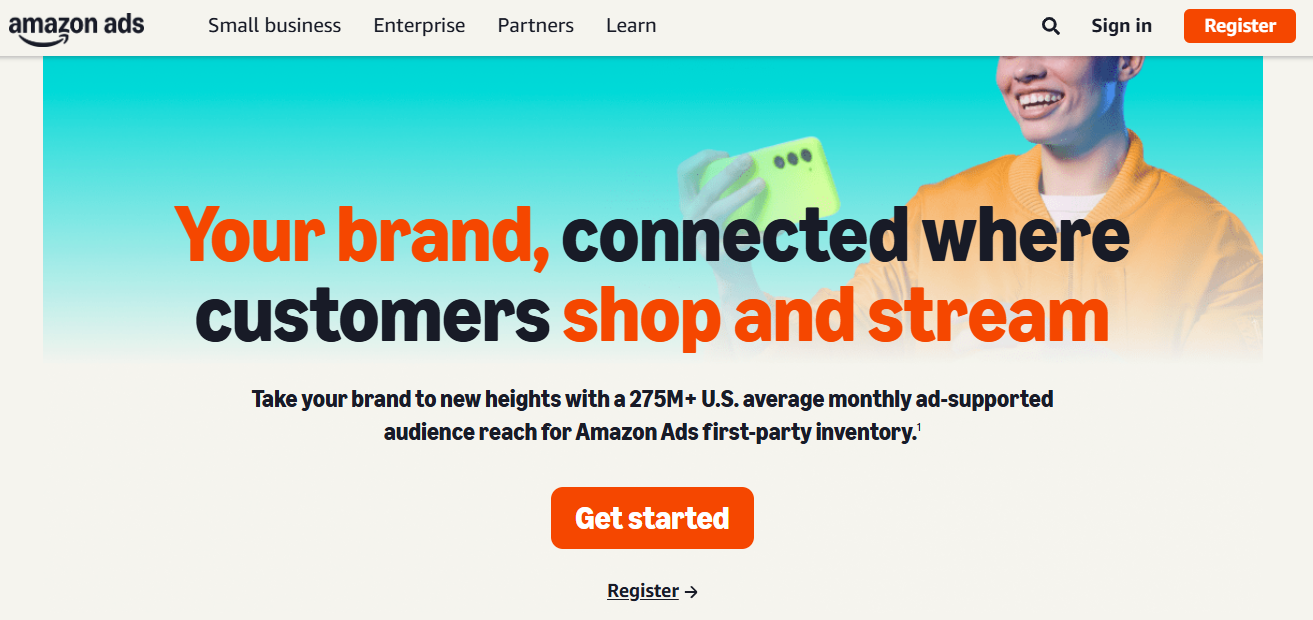
Amazon Ads is Amazon’s retail media offering. It includes Sponsored Products (ads when people search in Amazon), Sponsored Brands, Display via DSP (advertising off-site or video/audio), and retargeting. For many e-commerce brands, presence on Amazon is essential—not just optional.
Features:
- Sponsored Product & Sponsored Brands listings.
- Amazon DSP for display, video, audio (off-site & on Amazon properties).
- Retargeting via Sponsored Display.
- Access to Amazon’s first-party shopper and browsing data.
- Automation & bidding tools.
Reviews:
Very strong ROI when listings are well optimized (good images, reviews, price). But many sellers say that Amazon is now so competitive that ad costs lead to thin margins. Some high-volume categories (electronics, home appliances, etc.) have such high CPCs that only those with excellent cost control win.
Pricing Overview:
- Sponsored Products CPC range often $0.75-$5+ depending on category, competition, and conversion rate. In aggressive verticals, CPC can exceed $10+.
- DSP minimums typically $35,000-$50,000 commitment for advanced campaigns (though some smaller placements are possible).
- Premium format CPMs (video/audio) may range from ~$25-$50+ depending on reach and targeting.
Pros:
- Excellent “purchase intent” since customers are already on Amazon searching or buying.
- Strong measurement: you can often see actual purchases via Amazon dashboards.
- Full funnel options: discovery, awareness, retargeting, conversion.
Cons:
- Costs escalate in competitive verticals. Margins can wear thin.
- Managing DSP & retargeting requires skill; bad optimization wastes money.
- For smaller brands, budget minimums and competition can be a barrier.
Best For:
Brands that are selling or plan to sell on Amazon, have competitive products, good reviews, and want to dominate search & product visibility in that ecosystem.
Amazon Ads is nearly unavoidable for many growing e-commerce brands. But dominance comes with cost. The key is optimizing every piece—feed, price, image, conversion—and watching your margins closely.
Network 2: Walmart Connect
Walmart Connect is Walmart’s ad / retail media network. It combines Walmart’s physical stores + online platform + partner marketplace, expanding into off-site programmatic and Connected TV. Especially useful for brands that sell in Walmart or want exposure to Walmart’s shopper base.
Features:
- Sponsored Search & product listing ads on Walmart.com/app.
- Display & banner ads on Walmart’s digital properties.
- Off-site programmatic and CTV ad placements via partnerships (e.g., Vizio).
- In-store digital signage, endcaps, etc.
- Loyalty/customer data for targeting & measurement.
Reviews:
Advertisers often praised Walmart for good cost efficiency (CPCs often lower than Amazon in many non-premium verticals). Walmart’s value shoppers, frequent buyer base helps for CPG or essential goods. But creative value and video / CTV inventory is newer; reporting and tools are catching up.
Pricing Overview:
- CPCs for search/listing often range roughly $0.80-$3, depending on the vertical.
- Off-site display & CTV CPMs may cost more (~$15-$30+), depending on reach and targeting.
- Minimum spend/eligibility sometimes required for premium placements or managed media service.
Pros:
- Omnichannel strength: both in store and online.
- Loyalty and real shopper behavior data helps attribution.
- Less saturated in some categories, so possibly lower competition.
Cons:
- Premium format costs rising.
- Some ad formats (video, CTV) are still maturing.
- For non-grocery or non-essentials, Walmart’s shopper base may not always align.
Best For:
Brands in grocery, household goods, health, general merchandise; brands that want both online + in-store presence.
Walmart Connect is an excellent second pillar behind Amazon for many brands. If your product is a good fit and you can invest in premium formats, it can scale sales with solid ROAS.
Network 3: Target Roundel
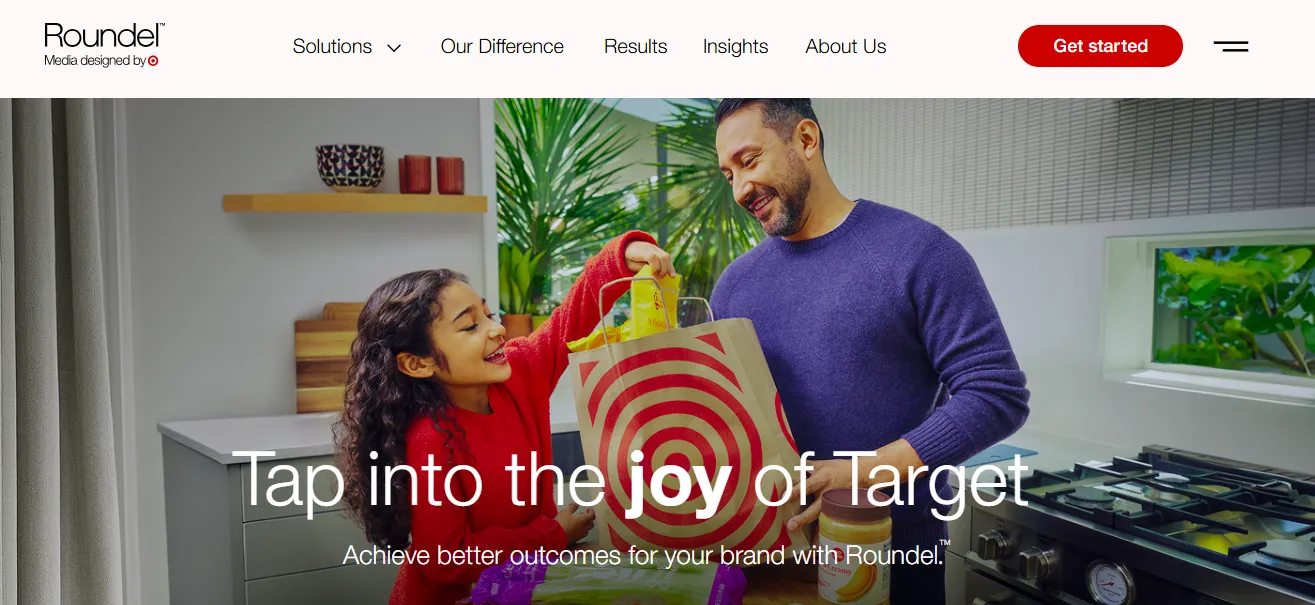
Target Roundel is the media arm of Target. It specializes in lifestyle, home décor, beauty, fashion—verticals where style and aesthetics matter. It offers both product listings and brand/display / native content.
Features:
- Sponsored listings/product promotion on Target.com and the app.
- Native and display advertising.
- In-store placements and signage.
- Off-site display/awareness using shopper data.
Reviews:
Brands in visually aesthetic verticals love Roundel’s ability to show off high-quality creative, and sync creative with lifestyle content. But the reach is not as huge as Amazon; costs in premium placements or graphics-heavy campaigns can be high.
Pricing Overview:
- Product listing or standard promotions are moderately priced.
- Native / display/editorial/premium placements have higher CPMs; possibly double the standard listing price when the creative is high.
- Vendor/supplier mode often gives better access/rates.
Pros:
- Very good for brand image + visibility.
- Strong for lifestyle, beauty, and home brands.
- Creative possibilities higher than many commodity retailer media networks.
Cons:
- Less volume for some verticals.
- High cost for premium creative / display.
- International reach more limited.
Best For:
Fashion, beauty, home décor, lifestyle brands wanting to build both sales + brand prestige.
Roundel is less about mass scale and more about high ROI per dollar when brand matters. If your product fits the shopper profile, it can deliver very strong returns.
Network 4: Kroger Precision Marketing (KPM)
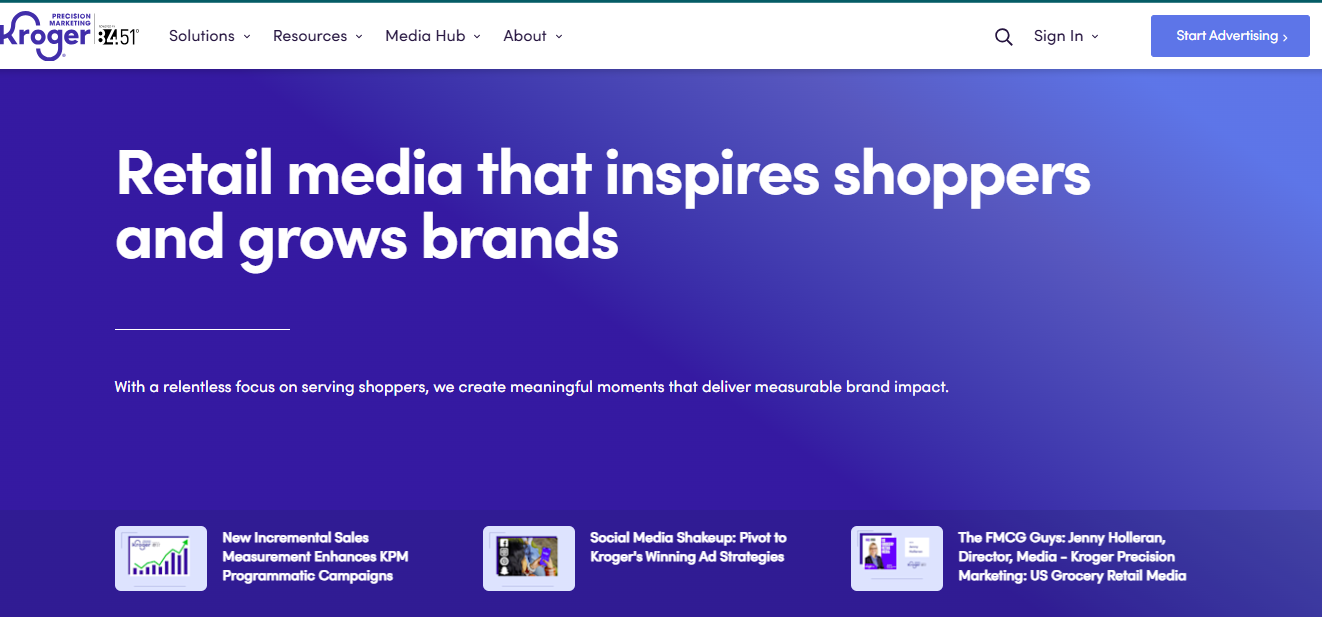
KPM is Kroger’s ad network in the U.S. It is especially strong in grocery, personal care, household goods, and brands that want to reach real in-store & online shoppers using loyalty data.
Features:
- Loyalty data integrated into targeting.
- Sponsored product listings; personalized promotions.
- Off-site programmatic ads using Kroger’s shopper data.
- Receipt or loyalty-based digital promotions.
Reviews:
Advertisers in grocery categories often see excellent ROI, especially when promotions match shopper behavior. Being able to track actual in-store + online purchases makes attribution stronger. But outside food/household, creative formats are fewer; dollar margins smaller for luxury or technical goods.
Pricing Overview:
- CPCs / CPMs vary by category, but grocery tends to have more efficient (lower cost) CPCs due to frequent usage.
- Display and personalized ads cost more.
- Minimum budgets for off-site/programmatic often higher.
Pros:
- Excellent targeting & measurement.
- Very good for fast moving consumer goods (FMCG).
- Strong loyalty data gives better predictions.
Cons:
- Less strong for non-CPG / non-groceries.
- Some creative / format limitations.
- Premium targeting may require relationships/vendor status.
Best For:
Food, health, household, personal care brands wanting both online + offline scale.
KPM is a highly efficient network for grocery/household categories. If your product fits, investing here typically gives reliable returns.
Network 5: Instacart Ads
Instacart Ads lets brands show up within the grocery shopping app and partner stores. Because people are often choosing groceries consciously and frequently, it’s a strong channel for last-mile influence.
Features:
- Featured product ads inside categories & search.
- Display/video placements in app.
- Brand pages for storytelling.
- Data across partner stores.
Reviews:
Good performance in conversion, especially for grocery/consumables. Many brands report efficient ROAS. However, creative formats are limited compared to Amazon DSP or Google’s video side. Also, costs can vary heavily by region/store partner.
Pricing Overview:
- CPC often under $1 in many staple categories.
- CPM for display/video higher depending on audience & store.
- Need sufficient budget to test newer formats.
Pros:
- High purchase intent.
- Many customers already in “shopping mode.”
- Multi-store reach gives scale.
Cons:
- Format & creative limitations.
- Not great for non-grocery or luxury items.
- Cost variation across stores can hurt predictability.
Best For:
Everyday staples, groceries, consumables, products people buy frequently.
Instacart Ads is one of the most conversion-efficient channels for grocery categories in 2026. Use it if your product fits; optimize store coverage to avoid unexpected high costs.
Network 6: Meta Ads (Facebook & Instagram)
Meta Ads continues to be a workhorse for many e-commerce brands. It’s good for discovery, retargeting, impulse purchases, and visual storytelling. But 2026 conditions demand more sophistication.
Features:
- Feed, Stories, Reels, Carousels, Video.
- Catalog sales & dynamic product ads.
- Lookalike & custom audience targeting.
- Shopping tags, shops integration.
Reviews:
Strong when creative is fresh, targeting is sharp, and you use advanced tracking. But many brands complain about rising ad costs, murky attribution (especially after privacy changes), and performance varying greatly by creative quality.
Pricing Overview:
- CPMs of ~$5-$20+ depending on audience, region, creative format.
- CPCs vary; non-competitive niches may get lower CPCs (~$0.50-$1), but competitive ones much higher.
- Frequent creative refresh needed to avoid fatigue.
Pros:
- Excellent reach & discovery.
- Powerful retargeting & dynamic product ad capabilities.
- Variety in ad formats.
Cons:
- Attribution issues: privacy and device changes dilute measurement.
Costs rising and competition heavy. - Creative demands are high (video, quality images).
Best For:
Visual products; impulse purchases; brands with strong creative assets; those who can test and optimize frequently.
Meta can still deliver great ROAS if you do things right. But it’s no longer “set-and-forget.” Monitor closely and invest in creative and tracking.
Network 7: Google Ads / Google Shopping
Google remains critical. Between people searching for “buy shoes online” or “best smartphone,” and product feed ads, you capture demand when people want to buy. Google Shopping and Performance Max add powerful tools in 2026.
Features:
- Search Ads (keyword-based).
- Shopping Ads (product feed).
- Performance Max: combines search, shopping, display, video to optimize automatically.
- Display / Video for retargeting or awareness.
Reviews:
Lots of brands report that Google search & shopping deliver among the best ROAS, especially when product feed is optimized. But keyword cost inflation, feed errors, and broad search match can waste budget if not tuned. Performance Max helps but demands good creative & supervision.
Pricing Overview:
- CPCs in many non-competitive verticals: $1-$5. In competitive verticals (insurance, tech, fashion), much higher.
- Shopping feed campaigns can be more efficient cost/per click than broad display.
- Performance Max campaigns often raise reach but can require higher budgets to unlock full potential.
Pros:
- Very clear intent.
- Strong tools & reach.
- Works for many types of products if feed is solid.
Cons:
- Intense competition in many verticals.
- Beginners often make mistakes in feed or keyword targeting.
- Creative for the video/display side must be good.
Best For:
Brands with products people search by name/feature; product feed is solid; brands comfortable optimizing search and shopping campaigns.
Google Ads / Google Shopping is often the backbone of e-commerce ad spend. Not glamorous, but effective.
Network 8: TikTok Ads
TikTok is the place people discover things via trends, entertainment, visual hooks. In 2025, it’s increasingly being used as a channel not just for discovery, but for real purchases via shopping tags, catalog integrations.
Features:
- In-feed video, collection ads, shopping tags.
- Creator/influencer partnerships.
- Catalog sync & campaign tools.
- Performance metrics are improving.
Reviews:
High engagement rates. Brands say that when they nail creative and are fast to adapt to trends, TikTok gives excellent reach and often a cheaper cost of reach than video on many networks. But for some, conversions lag, especially for expensive or less visually appealing products.
Pricing Overview:
- CPMs vary a lot—but often $2-$6 for broad reach video; CPCs vary by region and product.
- Creative production cost often higher than static/standard ads.
- Smaller budgets can test, but scaling tends to cost more.
Pros:
- Great discovery & virality potential.
- Younger audience.
- Good creative tools and fun formats.
Cons:
- Trend dependency means content can stale fast.
- Conversion rates for big or technical items often lower.
- Costs unpredictable.
Best For:
Fashion, beauty, trendy items, gifts, and products that younger people like. Brands with strong video or creative capability.
TikTok is a high-risk, high-return network. If you can be nimble and creative, it’s a strong discovery engine for scaling.
Network 9: Pinterest Ads
Pinterest is where people plan: weddings, home décor, fashion, gifts. They save ideas. In 2026, Pinterest is improving its shopping tools and catalog integration so products become more shoppable directly from pins.
Features:
- Catalogs, product pins.
- Promoted pins, video pins.
- Search + interest targeting.
- Shopping tags.
Reviews:
Very good performance in verticals with strong visual appeal. Lower CPCs / CPMs in many cases vs Meta or TikTok for similar verticals. The downside: slower purchase cycles; people often use Pinterest early in the decision process, not always immediately converting.
Pricing Overview:
- CPC/CPM moderate, depending on vertical: often lower than Meta in many lifestyle categories.
- Budget minimums are low enough for smaller galleries/stores.
- Holiday & seasonality can bump up cost.
Pros:
- Strong visual discovery.
- Good audience planning & inspiration.
- Less competition in many niches.
Cons:
- Slower to convert often; many impressions before purchase.
- Visual resource requirements are high.
- Less strong for non-lifestyle, non-gift, technical goods.
Best For:
Home decor, gift items, fashion, seasonal products, visual brands, artists, designers.
Pinterest is a strong part of a discovery + awareness stack. Doesn’t replace conversion-focused networks, but complements them well.
Network 10: Programmatic DSPs / Ad Networks (AdRoll, The Trade Desk, etc.)
These networks let you buy ad inventory across many sites/apps automatically. Great for retargeting past visitors, expanding reach where retail media doesn’t reach, and combining display/video/native formats.
Features:
- Real-time bidding (RTB) for display/video/native.
- Dynamic retargeting (showing products someone visited).
- Use audience data, behavior, and interest segments.
- Sometimes, product feed personalization.
Reviews:
Advertisers like DSPs for retargeting and filling gaps outside retailer platforms. But many say that if targeting is loose or creative weak, waste is high. Also viewability, fraud, or low transparency can be issues.
Pricing Overview:
- CPMs for display/video vary: moderate vs premium depending on inventory quality.
- CPA or cost per conversion models often possible.
- Minimum budgets or spend levels often required for better inventory.
Pros:
- Flexible reach beyond retail platforms.
- Good for retargeting, recapturing customers.
- Can use dynamic ads to personalize.
Cons:
- Attribution is more complex; hard to measure offline or full path transactions.
- Needs strong data & creatives to avoid waste.
- Some inventory has poor viewability or high fraud risk.
Best For:
Brands that already have audience/site traffic, want to capture cart abandoners, want to expand reach beyond just retail media. Brands with good analytics & creative.
Programmatic DSPs are powerful pieces of a full funnel stack. Use them where they fill a gap, especially in retargeting, awareness outside retailer sites, or when testing new channels.
Forward-Looking Ad Network Trends for 2026
Discover the major shifts already transforming ad networks in 2026—from AI-driven creative automation and the end of third-party cookies to the rise of connected TV, advanced attribution tools, and real-time predictive personalization. These changes will redefine how brands plan, buy, and measure ads.
- AI-driven creative & automation: Expect ad networks to allow brands to auto-generate video/image variants, auto-rotate creative based on performance, and auto-bid in real time. Not just dashboards, but “systems that think.”
- The death of third-party cookies & privacy changes are making first-party data, loyalty program data, unified IDs, and server-side tracking essential. Retail media networks are in the strongest position.
- Growth of CTV & omnichannel retail media: Walmart + Vizio integration; off-site + video + store digital signage will matter more. Brands will need to adapt to varied ad formats (TV, streaming, mobile, in-store).
- Better attribution/measurement tools: more brands will use multi-touch attribution, modeled conversions, and unified measurement across devices. UTM parameters and custom data pipelines will become non-negotiable.
- Dynamic personalization & predictive ads: using AI to predict what the shopper wants, adjusting offers in real time (product recommendations, bundling, pricing) inside ads.
FAQs
Here are some common questions people ask when choosing ad networks.
Q1. What ROAS targets should I expect in 2026 for e-commerce?
A: Depending on vertical, product price, margins, etc., many e-commerce brands aim for 3×-5× ROAS (use $1 to get back $3-5). For daily consumables/groceries, ROAS may be lower but volume higher. For luxury or high-cost items, ROAS expectations are lower initially but may grow.
Q2. Do I need a big product catalog or a large audience?
A: Not always. Smaller catalogs can perform well in listing ads or regional networks. But to unlock advanced formats (video, CTV, display, off-site programmatic) and scale, you will need decent volume or audience.
Q3. Can I use multiple networks together?
A: Yes — and you probably should. Use a stack: awareness (Pinterest, TikTok), mid-funnel consideration (search/product feed), conversion (retail media, marketplace ads). But manage frequency so you don’t waste money by showing the same ad to the same user repeatedly.
Q4. How do I measure performance given privacy/attribution challenges?
A: Use first-party tracking, server-side events, and UTM parameters. Use modeled conversions (Meta, Google), loyalty data (from your own customers), and offline data if you have stores. Use experiments / A/B tests.
Q5. What are realistic cost benchmarks I should know?
A: Here are some sample ranges (2026) from public data & industry reports:
- Amazon Sponsored Products CPC: $0.75-$5+, depending on category
- Walmart Connect CPC: ~$0.80-$3 in many categories
- Display/video ad CPMs for premium formats: $20-$50+ depending on targeting & reach
- Meta CPMs usually $5-$20+ for well-targeted campaigns
- TikTok video reach CPMs: ~$2-$6 for a broad audience, cost per acquisition (CPA) is higher depending on the product
Q6. How soon will I see results?
A: For search/listing ads (Google Shopping, Amazon), often within days to 1-2 weeks if product feed & targeting are good. For display/video/awareness channels, it may take weeks to months. Also depends on budget size, creativity, and market competition.
Conclusion:
Choosing the right ad networks in 2026 is less about finding a single “best” platform and more about creating a balanced strategy. Start by making sure your product feed, tracking, and analytics are solid. Then match networks to your funnel: top-of-funnel discovery on TikTok or Pinterest, intent on Google Search or Shopping, and conversion on Amazon, Walmart, or other retail media networks.
Keep testing, measuring ROAS with reliable attribution tools, and adapting to new trends like AI-generated creative, predictive bidding, and first-party data targeting. When you approach ad networks this way, you’re not just buying ads — you’re building a scalable, future-proof marketing system for your e-commerce business.
Frequently Asked Questions
How do I choose an ad network for e-commerce?
Choose based on your product, audience, geo, budget, creative format, tracking capabilities, and ROAS goals.
Which ad networks are best for e-commerce?
The best network depends on your funnel stage and audience. Many e-commerce brands use a mix of search, social, native, and display networks.
What metrics should e-commerce advertisers track?
Track ROAS, CPA, conversion rate, average order value, customer lifetime value, and attribution quality.
